

1. Finding a Verified Notary Public in Kathmandu
Many individuals searching online for a Notary Public in Kathmandu face difficulty identifying genuine legal professionals. Search engines often display numerous websites offering services such as “24/7 notarization,” “instant translation,” or “online apostille assistance.” While these offers may appear convenient, it is important to verify whether the service provider is legally authorized to perform notarization in Nepal.
Notarized documents are required for a wide range of official purposes, including immigration procedures, international education applications, overseas employment documentation, business contracts, property transactions, and court proceedings. Without proper notarization, documents may not be accepted by government authorities, embassies, universities, or financial institutions.
Because notarization involves legal authentication, choosing a legitimate service provider is crucial. This guide explains how notarization works in Nepal and provides practical steps to help individuals identify reliable notary services while avoiding fraudulent online platforms.
2. Importance and Common Uses of Notarization in Nepal
Notarization is a formal legal process in which a licensed professional verifies the authenticity of documents and confirms the identity of the person signing them. The notary ensures that the document has been signed voluntarily and that the individual has provided valid identification.
This process is essential for both domestic and international legal transactions because it increases the credibility and reliability of documents.
Common situations where notarized documents are required include:
- Immigration and travel documentation: visa applications, sponsorship letters, and identity declarations.
- International education: notarized academic certificates and transcripts for foreign universities.
- Overseas employment: verification of educational qualifications and personal declarations.
- Legal matters: affidavits, sworn statements, and declarations related to marriage, birth, or custody.
- Property transactions: power of attorney for buying or selling property.
- Business agreements: contracts and commercial documents for international partnerships.
- Court submissions: affidavits or evidence required in legal proceedings.
- Certified translations: official translation of documents for international use.
Proper notarization ensures that these documents are legally recognized in Nepal and, when required, can also be accepted by foreign institutions after further authentication procedures.
3. Legal Framework and Qualification of Notary Public in Nepal
Notarial services in Nepal are governed by the Notary Public Act, 2063 (2007). This law established a formal system for document authentication and regulates the appointment, duties, and professional conduct of notary publics.
The Act provides rules regarding:
- Appointment and authorization of notaries
- Verification procedures for documents and signatures
- Maintenance of official registers
- Ethical standards and responsibilities of notaries
In Nepal, a notary public is not a separate profession. Instead, a notary must first be a licensed advocate or lawyer who meets specific eligibility requirements. Generally, a legal practitioner must have several years of professional experience before receiving authorization to perform notarial services.
Because of this requirement, notary services are usually offered through law firms or legal offices rather than independent commercial businesses.
Contact https://kiplan.com.np/notarial-service/ for further detail information.
4. How to Verify an Authentic Notary Public
Before using any notarization service, individuals should verify whether the service provider is legitimate. A genuine notary public will typically operate through a recognized law firm and provide clear information about their professional credentials.
Important factors to verify include:
- Whether the person is a licensed advocate or lawyer.
- Whether the law firm has a professional website with advocate profiles.
- Whether the office address and contact details are clearly listed.
- Whether the website displays office photographs, team members, and legal qualifications.
A credible legal service provider usually presents transparent information about their experience, services, and professional background.
Reliable information about notarization in Nepal can also be found on trusted websites such as: https://kiplan.com.np; https://notaryinnepal.com
These resources provide guidance on legal documentation and notarization procedures.
5. Warning Signs of Fake Online Notary Services
With the growth of digital marketing, some websites claim to offer instant online notarization, which may not comply with Nepal’s legal requirements. Individuals should be cautious when encountering such services.
Common warning signs of fraudulent platforms include:
- No advocate profile or professional credentials on the website.
- Absence of an “About Us” page.
- No physical office address or contact details.
- Lack of office photographs or staff information.
- Unrealistic claims such as “24-hour notarization anywhere in Nepal.”
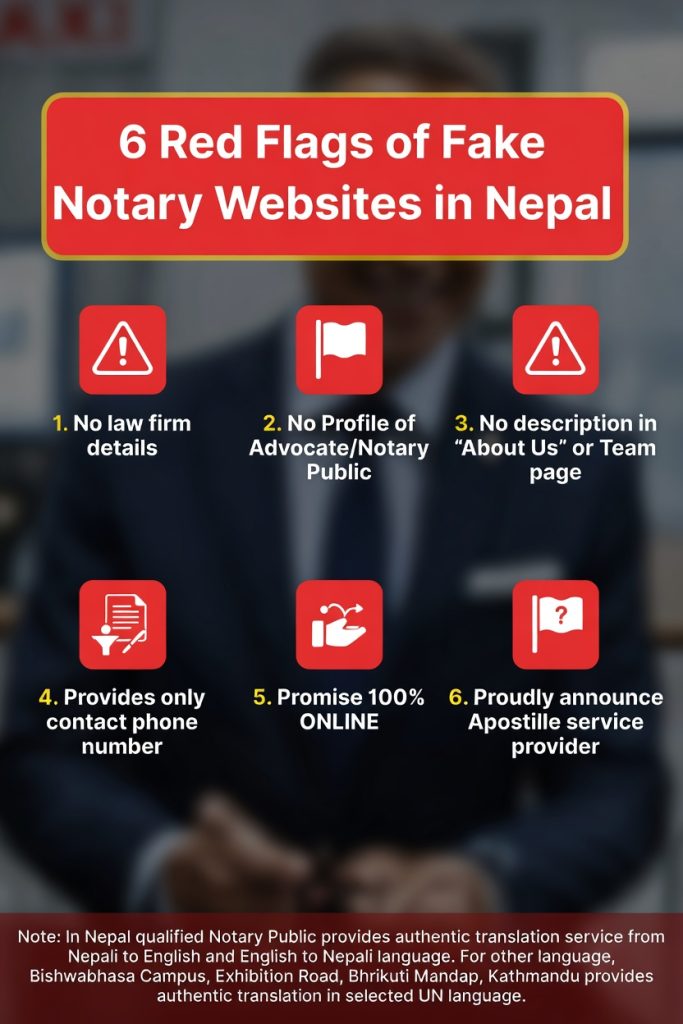
Since notarization requires identity verification and official record-keeping, these services often raise serious concerns regarding authenticity.
Contact https://kiplan.com.np/notarial-service/ for further detail information.
6. Legal Procedure and Documents Required for Notarization
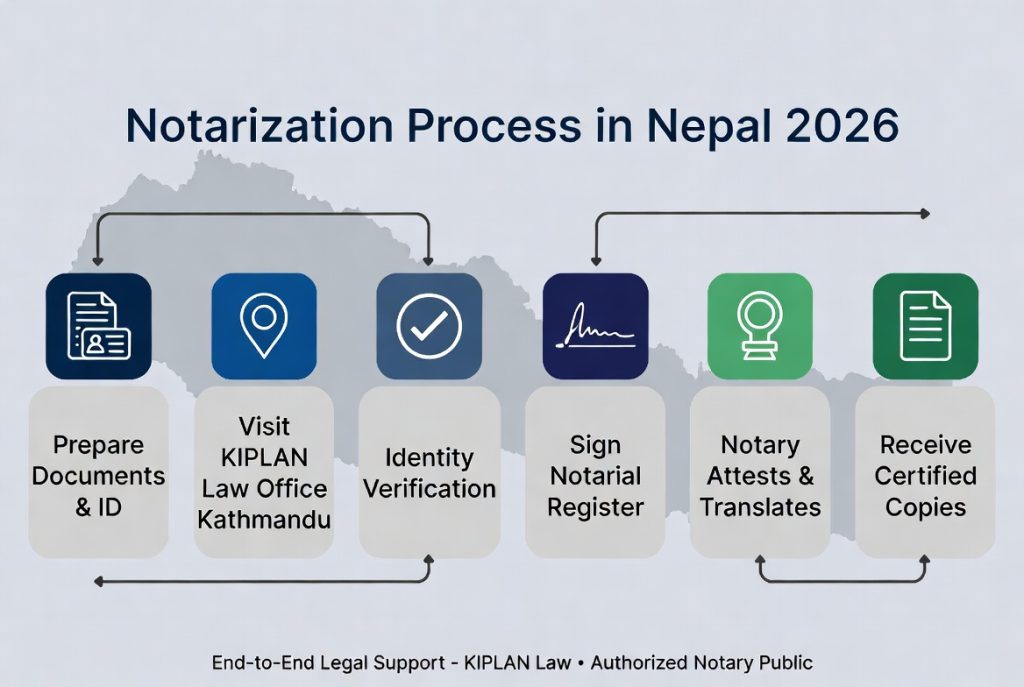
The notarization process in Nepal generally follows a structured procedure designed to ensure legal authenticity.
Typical steps include:
- Preparing the original document and photocopies.
- Visiting an authorized notary public or law firm.
- Presenting valid identification documents.
- Fill in the application form for notary office record, which notary public repot to the Notary Public council and district court of the relevant district.
- Signing the document in the presence of the notary.
- The notary verifying the identity and authenticity of the document.
- Recording the transaction in an official notarial register.
- Applying the official seal and signature to certify the document.
Applicants must normally bring identification documents such as:
- Citizenship certificate
- Passport
- National identity card
- Voter ID card
- Driving license
These steps ensure transparency and maintain official records of all notarized documents.
7. Apostille Services, Pricing Transparency, and Safety Tips
Many individuals who require notarization also need apostille certification when submitting documents abroad. Apostille authentication is commonly required for documents translated into another language from original language.
Nepal is not a party of Hague Convention, therefore there is no Apostille service available in Nepal.
However, there is different practice of Apostille service in Nepal. A professional law firm can guide clients through the entire authentication process, including notarization, translation, and apostille preparation.
When choosing a notary service, it is also important to consider pricing transparency. Reliable legal offices clearly explain the fees for services such as:
- Document notarization
- Certified translation
- Affidavit drafting
- Legal verification
- Apostille preparation
To avoid scams, individuals should:
- Verify the advocate’s identity.
- Visit a physical office whenever possible.
- Review professional credentials and experience.
- Avoid services promising instant online notarization.
- Confirm service fees before proceeding.
By following these precautions, clients can ensure that their documents remain legally valid and internationally acceptable.
Good Luck!
Contact https://kiplan.com.np/notarial-service/ for further detail information.