

Discover expert contract management in Nepal. Learn 7 proven legal strategies, compliance requirements, and best practices to protect your business interests under Nepali law.
Introduction to Contract Management in Nepal
Contract management in Nepal is the systematic administration of agreements throughout their entire lifecycle. From initial planning and drafting to execution, monitoring, and closure, effective contract management ensures all parties fulfill their obligations while achieving predetermined business objectives. This discipline serves as a critical governance mechanism across Nepal’s public and private sectors, including infrastructure development, service delivery, commercial enterprises, and governmental operations.
The legal foundation for contractual relationships in Nepal derives primarily from the Muluki (National) Civil Code, 2074 (MCC 2074), which codifies fundamental contract law principles. This comprehensive legislation is supplemented by sector-specific statutes such as the Public Procurement Act, 2063 (PPA 2063), the Arbitration Act, 2055, and specialized regulations governing labor, construction, foreign investment, and commercial transactions. Understanding this legal framework is essential for any organization seeking to operate successfully within Nepal’s jurisdiction.

Table of Contents
- Legal Framework for Contract Management in Nepal
- Essential Elements of Valid Contracts Under Nepali Law
- Comprehensive Contract Lifecycle Management Process
- Public Procurement and Contract Management Requirements
- Common Challenges in Contract Administration
- Dispute Resolution Mechanisms in Nepal
- Best Practices for Effective Contract Management
- Case Studies: Successes and Failures
- Future Trends in Contract Management
1. Legal Framework for Contract Management in Nepal
The Muluki (National) Civil Code, 2074 (MCC 2074) serves as the primary legislation governing contract management in Nepal. Sections 502-532 codify fundamental contract law principles including formation, breach remedies, and compensation. This comprehensive code establishes the legal parameters within which all contractual relationships must operate, providing the foundation for both private commercial agreements and public sector contracts.
For public sector contracts, the Public Procurement Act, 2063 (PPA 2063) and its accompanying regulations mandate strict compliance requirements. The Public Procurement Monitoring Office (PPMO) oversees acquisitions exceeding NPR 1 million, ensuring transparency through electronic government procurement (e-GP) platforms. The PPMO plays a crucial role in maintaining integrity in public contracting and preventing corruption.
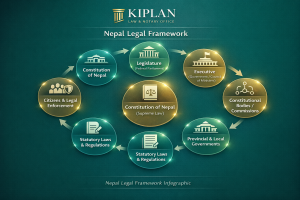
Additional relevant legislation includes the Arbitration Act, 2055, which facilitates alternative dispute resolution; the Labor Act, 2074,
governing employment contracts; the Foreign Investment Act, 2075, regulating international commercial agreements; and the National Building Code, which establishes standards for construction contracts. Organizations must navigate this complex regulatory landscape to ensure full compliance.
The Nepal Law Commission provides official translations and interpretations of Nepali laws, serving as an authoritative resource for legal practitioners and contract managers seeking to understand their obligations under national legislation.
2. Essential Elements of Valid Contracts Under Nepali Law
Under Nepali law, a valid contract requires several essential elements that must all be present for enforceability. First, there must be a lawful offer and acceptance between competent parties. The offer must be clear, definite, and communicated to the offeree, while acceptance must be unequivocal and communicated to the offeror within any specified timeframe.
Second, adequate consideration must be present. Consideration refers to something of value exchanged between parties, which may take the form of money, goods, services, or a promise to act or refrain from acting. Without valid consideration, a contract may be deemed unenforceable under Section 504 of the MCC 2074.
Third, genuine consent free from coercion, fraud, misrepresentation, or undue influence is mandatory. If consent is obtained through improper means, the affected party may have grounds to void the contract. Fourth, parties must have the legal capacity to contract, meaning they must be of legal age (18 years), of sound mind, and not disqualified by law.
Finally, the contract object must be lawful and not contrary to public policy. Agreements for illegal purposes, fraudulent activities, or those that would harm public welfare are void ab initio (void from the very beginning). The legal system recognizes diverse contract categories including construction contracts for infrastructure projects, service agreements for technical consultancy, procurement contracts for goods acquisition, public-private partnership concessions, and lease agreements for asset utilization.
3. Comprehensive Contract Lifecycle Management Process
Effective contract lifecycle management in Nepal follows a structured approach through several distinct phases, each requiring careful attention to detail and compliance with legal requirements. The planning phase involves comprehensive needs assessment, stakeholder mapping, and feasibility analysis to establish clear, measurable objectives aligned with organizational goals and national development priorities.
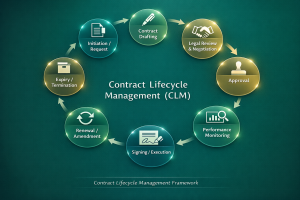
During the planning phase, organizations must determine optimal budgetary allocations and select appropriate contract modalities. Common contract types include fixed-price lump-sum contracts for well-defined scopes, cost-reimbursable agreements for research-intensive projects, and unit-price contracts for variable quantities. Risk analysis covering geological uncertainties, currency fluctuation impacts, political considerations, and federal-provincial jurisdictional complexities must be conducted thoroughly.
Contract preparation and drafting demands precision in articulating detailed scope of work, technical specifications, milestone schedules, payment terms linked to verifiable deliverables, performance warranties, liability limitations, force majeure provisions, and dispute resolution mechanisms. Under MCC 2074 Section 502, contracts concerning immovable property or exceeding statutory thresholds must be executed in writing with signatures of parties and witnesses.
The bidding and contractor selection phase requires strict adherence to PPA 2063 procedures. Public procurement must utilize electronic government procurement platforms ensuring transparency. Selection methodologies include open competitive bidding, limited tendering for specialized services, or direct contracting for genuine emergencies. Evaluation extends beyond lowest price to encompass technical competence (typically weighted 40-60%), past performance, financial capacity, and quality parameters.
Execution and performance management requires formal site handover, establishment of communication protocols, verification of insurance and bonding documents, and management of submittals including shop drawings and material samples. Contract administrators process interim payments based on joint measurement surveys, document all communications, and enforce formal variation order procedures with cost-time impact assessments.
4. Public Procurement and Contract Management Requirements
Public procurement in Nepal must strictly adhere to PPA 2063 through electronic government procurement platforms. The e-GP system, managed by the PPMO, ensures transparency and accountability in government contracting. All public entities must publish tender notices, receive bids, and evaluate proposals through this centralized platform, reducing opportunities for corruption and favoritism.
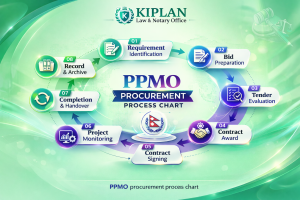
Selection methodologies include open competitive bidding for standard procurements, limited tendering for specialized services where few qualified contractors exist, or direct contracting for genuine emergencies where delay would cause significant harm. Each method has specific approval requirements and documentation standards that must be meticulously followed.
Performance security provisions typically require 5-10% of contract value, submitted as bank guarantees or insurance bonds. These securities protect the employer against contractor default and ensure commitment to project completion. Liquidated damages clauses stipulate penalties for delays, typically calculated as a percentage of contract value per day of delay, subject to maximum caps (commonly 10% of total contract value).
The employer’s representative, often an engineer-in-charge for construction projects, issues instructions, inspects workmanship, and certifies payments to prevent unauthorized deviations. This role requires technical expertise and independence to ensure quality outcomes while maintaining contractual relationships.
For international best practices in procurement, organizations may reference the FIDIC (International Federation of Consulting Engineers) standard contract templates, which have been adapted for use in Nepal’s construction industry.
5. Common Challenges in Contract Administration
Several systemic challenges affect contract management in Nepal, requiring proactive mitigation strategies. Judicial complexity arises from ambiguous contract language triggering disputes in courts burdened with extensive case backlogs. The judiciary’s limited familiarity with technical contract matters can result in prolonged litigation and uncertain outcomes.
Chronic delays affect approximately 85% of infrastructure projects due to multiple factors: poor site investigations during planning, right-of-way acquisition delays, frequent design changes, contractor incompetence or financial difficulties, and bureaucratic payment bottlenecks. These delays increase project costs and reduce public confidence in government procurement.
Corruption and collusion persist despite PPMO oversight, with bid-rigging, cartel formation among contractors, and abuse of direct procurement procedures reported annually. The Commission for the Investigation of Abuse of Authority (CIAA) investigates procurement irregularities, but enforcement remains challenging.
Monitoring deficits particularly affect sub-national governments that lack qualified engineers and contract administrators. Superficial inspections and substandard work acceptance result from inadequate technical capacity, aggravated by fragmented agency responsibilities and poor coordination between federal, provincial, and local governments.
Technical capacity gaps include shortages of certified contract managers familiar with FIDIC conditions and international best practices. Brain drain of qualified professionals and inadequate university curricula compound this challenge, limiting the pool of expertise available for complex projects.
6. Dispute Resolution Mechanisms in Nepal
Contract disputes in Nepal follow an established escalation ladder designed to resolve conflicts efficiently while preserving business relationships. Parties first attempt direct negotiation, engaging in good-faith discussions to identify mutually acceptable solutions without formal proceedings.
If negotiation fails, parties may proceed to court-annexed mediation, where a neutral mediator facilitates discussions but does not impose decisions. Mediation offers confidentiality, cost savings, and faster resolution compared to litigation. For contracts exceeding NPR 50 million, institutional arbitration through bodies like the Nepal Arbitration Council provides alternative resolution with binding decisions.
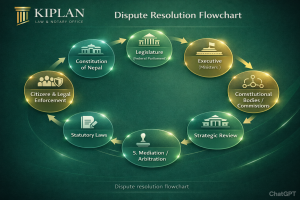
Arbitration proceedings are governed by the Arbitration Act, 2055, which recognizes both domestic and international arbitration. Arbitral awards are generally final and binding, with limited grounds for appeal to the courts. This finality makes arbitration attractive for commercial disputes where parties desire certainty and closure.
Litigation proceeds through District Courts with jurisdiction based on contract value and subject matter, with appeals to High Courts and the Supreme Court. Section 521 of the MCC permits compensation for foreseeable losses resulting from breach of contract, while Dispute Adjudication Boards enable real-time resolution in large infrastructure projects, helping minimize costly litigation delays.
7. Best Practices for Effective Contract Management
Implementing best practices in contract management delivers significant benefits including 15-20% cost savings, on-time project completion, enhanced quality, and reduced litigation risks. Organizations should utilize FIDIC-adapted templates with measurable metrics, clearly defined liquidated damages clauses (typically 0.05% daily, capped at 10%), and bonus provisions for early completion to incentivize performance.
Engaging independent legal counsel, chartered engineers, and quantity surveyors strengthens contract administration. Establishing a national registry of certified contract managers would help address capacity gaps and ensure qualified professionals are available for complex projects. Organizations should invest in training programs for officials managing projects exceeding NPR 10 million, promoting certifications like Certified Professional in Contract Management (CPCM).
Digital integration through contract management software enables milestone tracking, automated alerts, and cloud documentation. Platforms like Procore, e-Contract systems, or custom government solutions improve transparency and reduce administrative burden. Continuous oversight through weekly site meetings, monthly progress reviews, quarterly audits, and deployment of GIS or drone technology for remote project verification ensures accountability.
Risk management should be proactive, with early identification of potential issues such as monsoon delays, import disruptions, or political strikes. Clear contractual allocation of risks and establishment of contingency reserves help organizations respond effectively when challenges arise.
Quality assurance processes must be integrated throughout the contract lifecycle. Third-party quality testing for construction materials, regular performance audits for service contracts, and compliance verification for procurement activities ensure that deliverables meet specified standards. Documentation of quality control activities provides evidence in case of disputes.
Closure procedures require careful attention to ensure all contractual obligations have been fulfilled. Substantial completion must be verified through joint inspection, defects rectified during the liability period (typically 12 months for construction), and final acceptance certification obtained. Retention monies (usually 10% of contract value) are released only after the warranty period expires and all documentation is archived.
8. Case Studies: Successes and Failures
Nepal’s infrastructure sector provides instructive examples of both successful and problematic contract management. The Melamchi Drinking Water Project exemplifies failure: a 26-year gestation period, poorly defined geological risk allocation, political interference in contract variations, inadequate supervision, and payment delays caused contractor insolvency. The project’s cost escalated from NPR 17 billion to NPR 50 billion, with the 2021 headworks collapse representing a catastrophic failure of contract administration.
Conversely, the Upper Tamakoshi Hydropower Project succeeded through diligent administration, milestone-linked payments, and proactive risk mitigation. Despite earthquake disruptions, the project delivered Nepal’s largest hydroelectric plant within 10% of budget, demonstrating that effective contract management can overcome significant challenges. Key success factors included strong project management, qualified technical staff, and adherence to international best practices.
9. Future Trends in Contract Management
The future of contract management in Nepal is being shaped by technological advancement, regulatory reform, and increasing integration with international standards. Digital transformation through blockchain-based contract execution, artificial intelligence for risk assessment, and automated compliance monitoring will revolutionize how organizations manage contractual relationships.
The federal restructuring of Nepal’s government has created new opportunities and challenges for contract management. Provincial and local governments now have procurement authority, requiring capacity building at all levels to ensure consistent application of best practices. Harmonization of procurement regulations across federal, provincial, and local levels remains an ongoing priority.
International trade agreements and foreign investment promotion will increase cross-border contracting, requiring Nepali organizations to become more familiar with international arbitration, foreign governing law clauses, and cross-border enforcement mechanisms. Professional development programs must evolve to prepare contract managers for this increasingly complex environment.
Conclusion
Effective contract management in Nepal requires comprehensive understanding of the legal framework, meticulous attention to lifecycle processes, and proactive risk mitigation strategies. By adhering to the Muluki Civil Code, Public Procurement Act, and international best practices, organizations can protect their interests while fostering transparent, accountable business relationships.
The challenges facing contract management in Nepal are significant but not insurmountable. With continued investment in capacity building, adoption of digital technologies, and commitment to transparency, Nepal can develop a world-class contract management system that supports economic growth and development.
For professional legal assistance with contract management in Nepal, consult experienced legal practitioners who understand both local regulations and international standards. Proper contract administration ultimately delivers cost savings, quality assurance, and successful project outcomes for all stakeholders.
Organizations seeking to improve their contract management capabilities should begin with a comprehensive assessment of current practices, identification of gaps against international standards, and development of a prioritized improvement roadmap. Investment in training, technology, and expert consultation yields significant returns through reduced disputes, improved project outcomes, and enhanced organizational reputation.
→ The information provided in this article is for general educational purposes and does not constitute legal advice. For specific contract management situations, consult KIPLAN Legal team.
Frequently Asked Questions
Q: What is contract management?
A: Contract management is the systematic administration of agreements throughout their lifecycle, from planning and drafting through execution, monitoring, and closure, ensuring all parties fulfill their obligations.
Q: What are the essential elements of a valid contract in Nepal?
A: Valid contracts require lawful offer and acceptance, adequate consideration, genuine consent free from coercion, capacity to contract, and a lawful object not contrary to public policy.
Q: How are contract disputes resolved in Nepal?
A: Disputes follow an escalation ladder: negotiation, mediation, arbitration (for contracts over NPR 50 million), and litigation in District Courts with appeals to higher courts.
Q: What is the role of PPMO in contract management?
A: The Public Procurement Monitoring Office oversees public procurement exceeding NPR 1 million, ensuring transparency through e-GP platforms and monitoring compliance with PPA 2063.
Q: What contract types are commonly used in Nepal?
A: Common types include fixed-price lump-sum contracts, cost-reimbursable agreements, unit-price contracts, construction contracts, service agreements, and public-private partnership concessions.